
Why Do Cookies Spread? 8 Causes and How to Fix Flat Cookies
Why cookies spread too much and turn flat: butter temperature, flour measuring, sugar, baking sheets, oven heat and dough chilling, with fixes for each.
By Ayoub Farid · · 2 min read
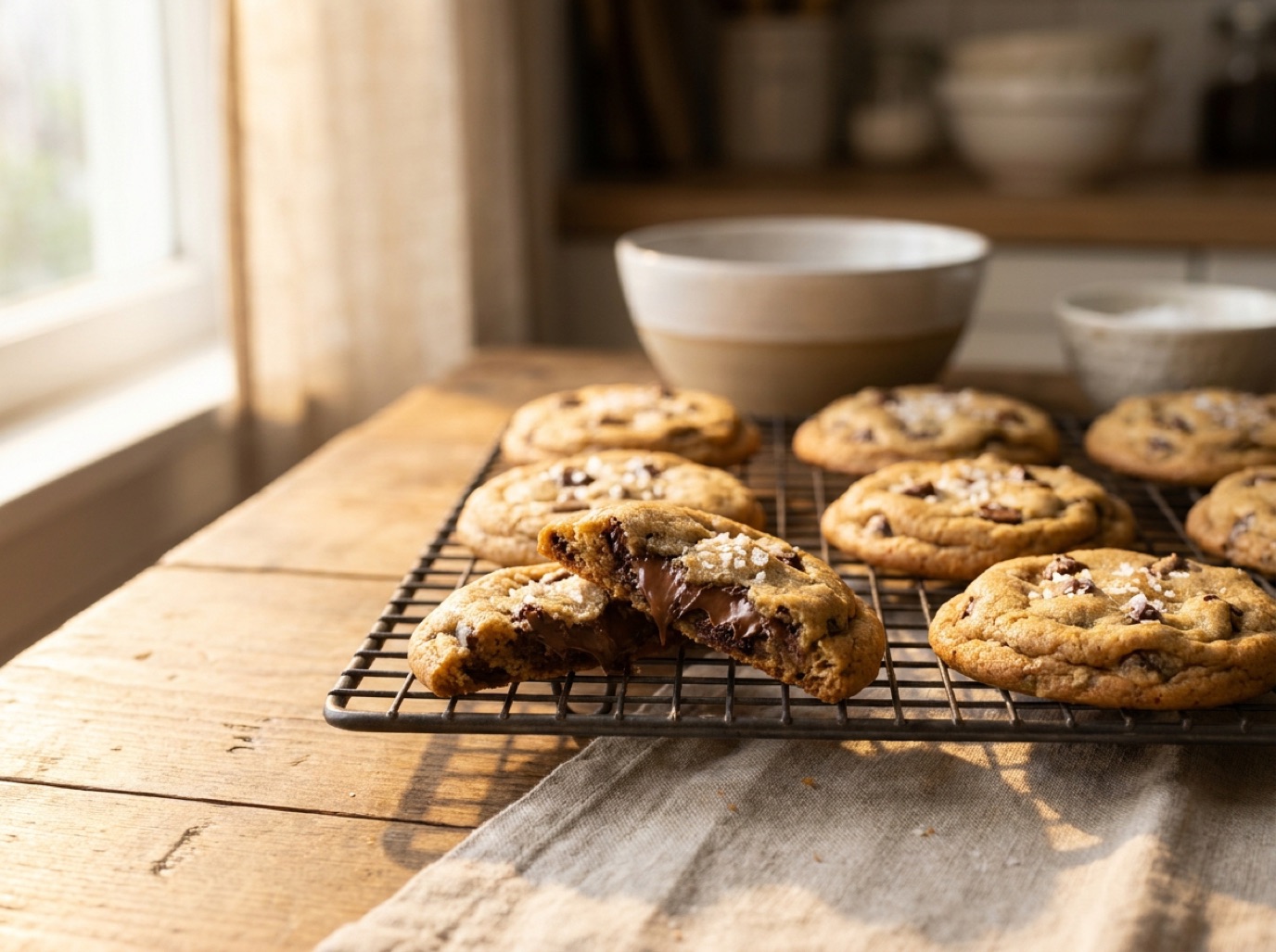
Flat, greasy cookies that merge into one giant cookie are one of the most common baking frustrations. Fortunately, the causes are well known and easy to fix.
1. Butter too soft or melted
Butter that's very soft or melted can't hold air or structure, so dough spreads before it sets. Fix: use butter that's softened but still cool (it should dent when pressed, not be greasy). Unless the recipe calls for melted butter, don't microwave it to liquid.
2. Not enough flour (measuring)
Under-measured flour means not enough structure. Fix: weigh flour (about 120–125 g per cup), or spoon and level it. See cups to grams.
3. Dough not chilled
Warm dough spreads quickly in the oven. Fix: chill the dough for 30 minutes to overnight. Chilling also deepens flavor.
4. Warm or greased baking sheets
Placing dough on a hot tray from the previous batch starts melting it early; greasing makes cookies slide. Fix: use cool trays and parchment paper.
5. Oven not hot enough
A low oven melts the butter before the cookie sets. Fix: fully preheat and check with an oven thermometer. See oven temperature conversion.
6. Too much sugar (or the wrong sugar)
Sugar liquefies as it heats; more sugar means more spread. Brown sugar adds moisture and chewiness. Fix: follow the recipe; if reducing sugar, expect texture changes.
7. Using spread instead of butter
Soft spreads and some plant butters contain more water and less fat. Fix: use a butter block (dairy or plant-based) suitable for baking. See dairy-free substitutes.
8. Over-creaming
Beating butter and sugar too long adds too much air, which can collapse. Fix: cream until light and fluffy (2–3 minutes), not longer.
Want them to spread less, quickly?
- Chill scooped dough balls for 15 minutes in the freezer.
- Add 1–2 tablespoons more flour.
- Make taller dough balls.
Want them to spread more?
Use melted butter, flatten the balls slightly, or bake at a slightly lower temperature for longer.
Troubleshoot with Cook AI
Describe your cookies in SmartChef AI: "Flat, greasy, crispy edges, used soft butter and cups." Cook AI suggests likely causes for your recipe. Save the fixed version. More baking: holiday cookie recipes.
Butter temperature guide
| Butter state | How it feels | Use for |
|---|---|---|
| Cold | Firm, hard to press | Pie crust, scones, biscuits |
| Softened (cool room temp) | Dents when pressed, still holds shape | Creaming for most cookies and cakes |
| Too soft | Greasy, shiny, collapses | Leads to spreading |
| Melted | Liquid | Chewy cookies designed for melted butter, brownies |
Softened butter is usually around 18–20 °C; on a warm day, it can over-soften quickly on the counter.
Frequently asked questions
Why are my cookies flat?
Usually soft or melted butter, too little flour, unchilled dough or an oven that isn't hot enough.
Does chilling cookie dough help?
Yes. It reduces spread and improves flavor.
Should I use baking soda or powder for less spread?
Follow the recipe. Leaveners affect rise and browning; changing them can create new problems.
Save it in one tap
Every recipe you love, in one smart kitchen
SmartChef AI saves recipes from TikTok, Instagram and any website, scans cookbooks and handwritten cards, and answers your cooking questions with an AI chef. Free to download on iPhone and iPad.
Download on theApp Store